_edited_edited.png)
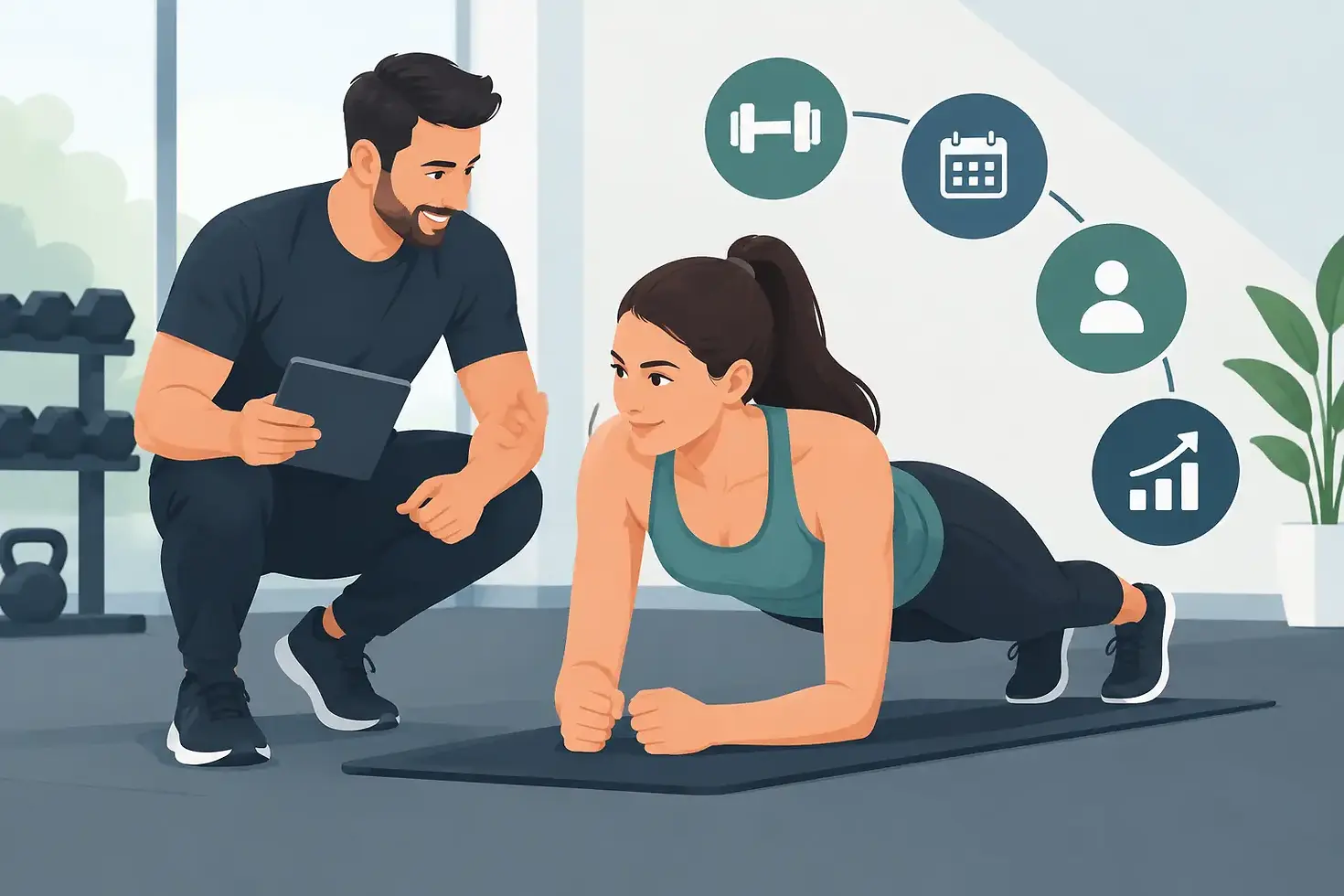
Accountability Based Fitness Coaching That Works

A 6:00 a.m. workout on the calendar is easy to ignore when a board meeting runs late, a flight leaves at dawn, or a demanding quarter takes over your week. Accountability based fitness coaching is designed for that reality. It turns fitness from another good intention into a protected commitment, supported by expert direction, clear expectations, and measurable progress.
For ambitious professionals, the issue is rarely a lack of information. You already know movement matters. You know nutrition affects energy, focus, and body composition. What often breaks down is execution when life gets crowded. A premium coach creates the structure that keeps your standards intact, even when your schedule is not.
What Accountability Based Fitness Coaching Actually Means
Real accountability is more than a trainer asking whether you completed your workout. It is a coaching relationship built around a specific outcome, a customized plan, regular review, and direct course correction.
Your coach understands the target: improve strength, lose body fat, build resilience, move without pain, or maintain performance during a high-pressure season. Every session, check-in, and adjustment should point back to that target. The result is less guesswork and fewer sessions that feel productive but fail to move the needle.
At its best, accountability is precise rather than punitive. Missing a planned workout is not a moral failure. It is useful data. Was the plan unrealistic? Did travel disrupt your routine? Is recovery falling behind? A skilled coach identifies the constraint and adapts the system without allowing one difficult week to become a lost month.
Why High Performers Need More Than Motivation
Motivation is valuable, but it is unreliable. It rises after a milestone and disappears under stress, poor sleep, or an overloaded calendar. High-performing people do not build serious careers by waiting to feel inspired. They rely on systems, deadlines, expert input, and accountability. Fitness deserves the same level of operational rigor.
A customized training roadmap removes daily decision fatigue. You do not need to debate whether to train, search for the right workout, or wonder if your program still fits your goals. You arrive with a plan designed around your current capacity, schedule, training history, and priorities.
That structure also protects efficiency. A 45-minute session can produce meaningful results when it is intelligently programmed and coached with intent. By contrast, several unfocused gym visits each week may deliver fatigue without progress. For clients with limited time, precision is not a luxury. It is the difference between consistency and abandonment.
Accountability Is a Standard, Not Surveillance
The best coaching does not create dependence. It develops self-trust. You learn how to train well, recognize when recovery needs attention, and make better choices when your routine is disrupted.
Still, external accountability remains powerful. A scheduled private session creates a commitment that competes effectively with work demands. Progress reviews make vague goals visible. A coach who knows your baseline can tell the difference between a temporary plateau and a plan that requires adjustment.
This is particularly valuable for professionals who are accustomed to being accountable to teams, clients, and investors while leaving their own health to chance. Your body should not receive whatever attention is left over after everyone else has made their demands.
The Elements of a Coaching Relationship That Delivers
Not all accountability is equal. Generic reminders and standardized workouts can be useful for someone seeking basic activity. They are rarely enough for a person with demanding standards, a complex schedule, or a meaningful physical goal.
Effective accountability based fitness coaching combines several elements that work together:
A clear starting point. Coaching begins with an honest assessment of movement, strength, conditioning, lifestyle demands, injuries, and goals. You cannot build a high-performance plan on assumptions.
Training designed for your life. A program should account for travel, long workdays, access to equipment, recovery capacity, and the number of sessions you can consistently complete.
Scheduled touchpoints. Private sessions, virtual coaching, and progress reviews create rhythm. You are not left alone with a plan after the initial consultation.
Objective measurement. Scale weight may matter, but it is not the only metric. Strength, mobility, energy, sleep quality, body composition, consistency, and confidence all help reveal whether the plan is working.
Intelligent adjustments. The plan should evolve as your body and schedule do. A plateau, new goal, business trip, or stressful season calls for coaching judgment, not a recycled template.
The trade-off is straightforward: high-touch coaching requires an investment of time, attention, and resources. But for clients who value discretion, expertise, and outcomes, it often prevents the greater cost of cycling through ineffective programs for years.
What a Week of Personalized Accountability Can Look Like
A well-designed week does not need to dominate your calendar. It needs to fit it.
You may have two private strength sessions scheduled around your most reliable windows, with one virtual session or concise hotel workout prepared for travel. Your coach reviews performance, addresses movement quality, and progresses the plan based on what happened in the previous week. If a major deadline cuts into sleep, training volume may be adjusted to preserve momentum rather than forcing an unnecessary grind.
Outside of sessions, accountability can include direct check-ins around the behaviors that influence results most: completing planned workouts, protein intake, daily movement, hydration, or a recovery target. The focus should remain narrow enough to execute. Trying to overhaul every habit at once is often a sophisticated form of procrastination.
For some clients, the priority is body composition. For others, it is stronger performance on the tennis court, better posture through long workdays, or the energy to be present with family after work. The framework is consistent, but the roadmap must be personal. Luxury is personal, and effective coaching is too.
How to Choose the Right Accountability Coach
The right coach should make your fitness feel more manageable, not more complicated. Look for someone who asks intelligent questions before prescribing solutions and who can explain why your plan is structured the way it is.
Experience matters, but communication matters just as much. You need a coach who can be direct without being rigid, supportive without lowering the standard, and responsive without creating noise. The relationship should feel professional, private, and focused on results.
Ask how progress is measured, how programming changes when your schedule changes, and what support exists between sessions. If the answer is a generic app, a prewritten program, or a one-size-fits-all nutrition rule, the service may not match your needs.
INNOVA FITNESS approaches coaching as a concierge-level performance partnership, with private and virtual options designed around the realities of demanding careers. The goal is not to keep you busy. It is to make every investment in your health count.
Results Come From a Plan You Can Keep
The most impressive workout is not the one that leaves you exhausted on Monday. It is the one you can repeat, progress, and sustain through real life. Accountability gives that process weight. It makes the appointment harder to dismiss, the data harder to ignore, and the next right action easier to take.
Your ambition already has a calendar, a strategy, and people who expect follow-through. Give your health the same level of intention, and let your fitness become one of the systems that supports everything else you want to achieve.


Comments